
Thinking about leaving the corporate world for a career with more purpose?
Nonprofit and social impact organizations offer opportunities for professionals who want to use their skills to support communities, advance important causes, and contribute to meaningful work.
And here's something worth knowing: You don't need a nonprofit background to get started.
Your Corporate Skills Can Transfer
Nonprofits need many of the same professional skills as businesses.
Experience in project management, finance, human resources, marketing, technology, customer service, and operations can be valuable in mission-driven organizations.
For example:
Corporate HR professionals can support nonprofit human resources and talent management.
Marketing professionals can help organizations strengthen communications and community engagement.
Finance professionals can manage budgets, financial reporting, and organizational resources.
Project managers can coordinate programs, partnerships, and community initiatives.
Sales professionals can apply relationship-building skills to fundraising and development.
The key is understanding how your experience connects to the organization's needs.
Explore Nonprofit Career Opportunities
Nonprofit careers go far beyond fundraising and direct services.
Organizations hire professionals for positions such as:
Program Manager
Development Director
Operations Manager
Human Resources Manager
Communications Specialist
Grant Writer
Finance Director
Explore Program Management Jobs and Fundraising Opportunities to see examples of roles in the sector.
Understand the Differences
Moving from corporate to nonprofit work may involve some adjustments.
Nonprofits often operate with smaller teams, different funding structures, and responsibilities shaped by their missions.
Compensation, benefits, advancement opportunities, and workplace resources vary by organization.
Before accepting a position, research the employer, review salary expectations, and understand the role's responsibilities.
You can also explore salary information to help evaluate opportunities.
Position Yourself for the Transition
You don't have to start your career over.
Instead, focus on showing employers how your existing experience can support their mission.
A few practical steps:
Update your resume. Highlight accomplishments, leadership, and transferable skills.
Research organizations. Identify nonprofits working in areas that interest you.
Build connections. Network with nonprofit professionals and attend sector events.
Be open to different roles. Explore full-time, part-time, hybrid, remote, and contract
Related posts
Interested in nonprofit work? Discover six practical ways to build experience, highlight your skills, and land your first opportunity.
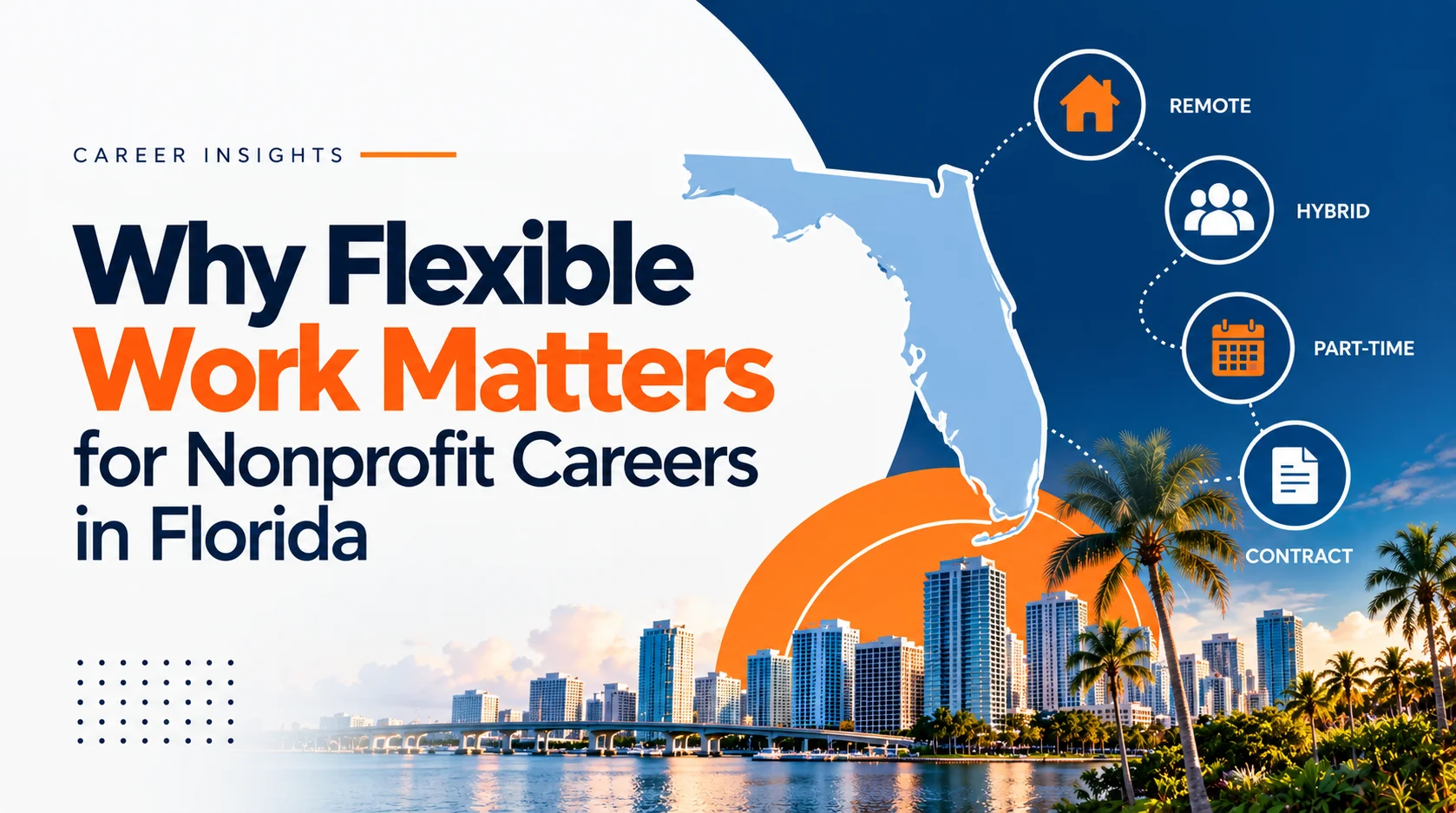
Flexible work is creating more options for nonprofit professionals and employers in Florida. Explore the opportunities and benefits of different work arrangements.
Discover seven places to find remote and hybrid nonprofit jobs, plus practical tips for searching and applying to mission-driven opportunities.